

Legal Drafting Professional Writing
Effective legal drafting and professional writing require more than a sound command of English. They demand clarity of thought, precision of language and consistency of expression.
Whether drafting contracts, legal correspondence, policies or business documents, the way ideas are structured and communicated directly influences how they are understood and interpreted. Careful drafting helps reduce ambiguity, strengthens credibility and ensures that complex information is conveyed with accuracy and confidence.
The articles in this section explore key aspects of legal drafting and professional writing, including precision, consistency, terminology, style and drafting conventions. Their purpose is not simply to explain how documents should be written, but why these principles matter in legal and international professional practice.
Every word should have a purpose. Every sentence should serve a function.
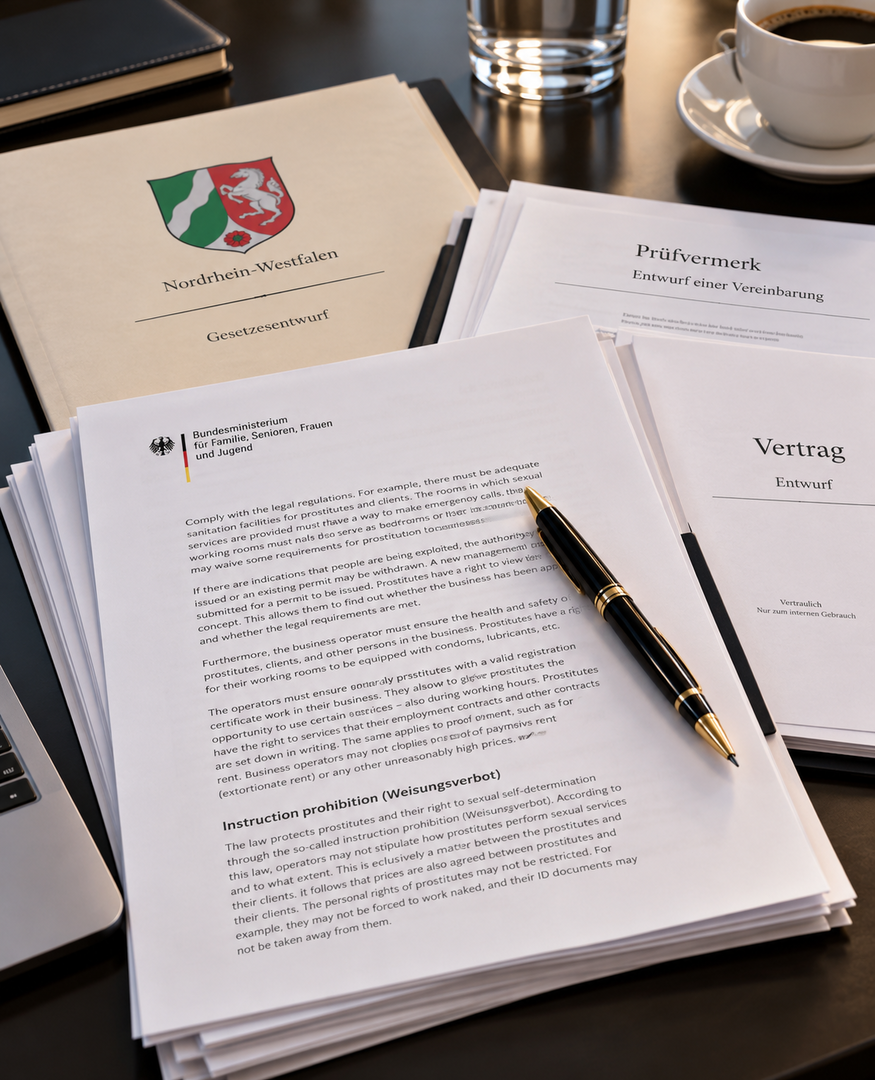
Why International Legal Communication Requires More Than a Shared Language
International business is often described as operating in English. While this is largely true, it can also create a false sense of security. Sharing a common language does not necessarily mean sharing a common understanding.
Cross-border legal communication extends far beyond vocabulary and grammar. It is shaped by legal systems, professional cultures, drafting conventions and assumptions that are often so familiar to those involved that they remain invisible.
A seemingly simple example illustrates the point.
Consider the date 05/12/2026.
For an American lawyer or business professional, the date will normally be interpreted as 12 May 2026. For most lawyers and businesses in continental Europe, it is far more likely to be understood as 5 December 2026. Both interpretations are perfectly logical within their respective jurisdictions. Neither party is making a linguistic mistake. The misunderstanding arises because both assume that their own convention is universal.
The consequences, however, may be anything but minor.
In international contracts, dates determine payment deadlines, delivery schedules, notice periods, limitation periods and contractual milestones. An apparently insignificant formatting difference can ultimately result in missed deadlines, delayed performance or costly contractual disputes. Courts and arbitral tribunals are frequently required to determine not what the parties intended to agree, but what the language of the agreement objectively conveys.
The same principle extends well beyond dates.
Legal professionals regularly encounter concepts that appear familiar but carry different meanings depending on the jurisdiction. Expressions such as reasonable efforts, best efforts, good faith, material breach or wilful misconduct cannot simply be translated word for word. They are legal concepts embedded within particular legal systems and judicial traditions.
Professional communication therefore requires more than linguistic competence.
It requires an awareness that language operates within legal, cultural and professional frameworks. What appears entirely unambiguous in one jurisdiction may be interpreted differently in another.
This is particularly relevant during international negotiations.
Negotiations are often viewed as discussions about price, liability or commercial risk. In reality, they are also discussions about meaning. Parties bring different legal traditions, drafting styles and communication habits to the negotiating table. Direct communication may be regarded as efficient in one culture and unnecessarily confrontational in another. Likewise, an indirect style intended to preserve professional relationships may be interpreted elsewhere as uncertainty or a lack of commitment.
Successful negotiators recognise these differences.
They do not merely translate words. They identify assumptions.
Perhaps this is one of the most underestimated aspects of international legal communication. Lawyers frequently devote considerable attention to governing law, jurisdiction clauses and limitation of liability. Yet communication itself is often assumed to be straightforward simply because everyone speaks English.
Experience suggests otherwise.
Effective cross-border communication requires precision not only in language but also in the legal concepts, drafting conventions and cultural expectations that language conveys. The objective is not simply to avoid misunderstandings. It is to ensure that all parties understand the contract in the same way before it is signed.
Ultimately, Legal English is not simply about using English.
It is about communicating legal meaning accurately across languages, legal systems and professional cultures.

Consistency and Corporate Language in International Professional Communication
Professional communication is not only shaped by expertise, but also by consistency.
In international legal and corporate environments, language forms part of professional identity and organisational credibility.
Many organisations develop a form of internal or professional “corporate language”. This does not merely refer to terminology or technical vocabulary, but also to:
- writing style,
- tone,
- linguistic consistency,
- drafting conventions,
- and communication standards across departments and professional contexts.
For law firms and internationally active companies, consistency in communication is particularly important. Clients, business partners and stakeholders generally perceive an organisation as a single professional entity rather than as a collection of individual writers with different linguistic styles.
Inconsistent drafting, varying terminology or mixed language variants may unintentionally create an impression of:
- lack of precision,
- insufficient coordination,
- or reduced professional coherence.
This becomes especially relevant in:
- contracts,
- compliance documentation,
- regulatory communication,
- internal policies,
- professional correspondence,
- and multilingual environments.
One aspect that is often underestimated is the distinction between British and American English.
The issue is not limited to spelling differences alone. Language variants may also influence:
- tone,
- stylistic expectations,
- drafting conventions,
- date formats,
- and cultural perception.
For example, British English is frequently associated with a more formal and internationally traditional professional style, particularly in European and Commonwealth-related contexts. Once a language variant has been chosen, consistency throughout professional documentation becomes essential.
Clear and coherent communication reduces the risk of misunderstandings and contributes to professional trust.
Professional English in international environments therefore requires more than grammatical correctness. It involves linguistic consistency, contextual awareness and communication that reflects the professional standards of the organisation as a whole.

The Importance of Precision in Legal and Professional English
In international professional environments, communication is rarely “just language”.
Particularly in legal, regulatory and cross-border contexts, linguistic precision directly influences clarity, professional credibility and the
interpretation of information.
Legal and professional English therefore differs significantly from general business communication.
A contract clause, compliance statement, regulatory explanation or professional email may appear linguistically correct while still creating ambiguity because of:
- imprecise terminology,
- unintended tone,
- differences between legal systems,
- or culturally different communication expectations.
Professional communication in international environments often requires an awareness of:
- legal terminology,
- drafting conventions,
- professional register,
- intercultural communication,
- and contextual precision.
This becomes particularly relevant in areas such as:
- cross-border business communication,
- legal drafting,
- compliance communication,
- regulatory environments,
- negotiations,
- and communication involving internationally active professionals.
In many situations, clarity is not achieved through complexity, but through controlled and precise language.
Effective professional English is therefore not merely a question of grammar or vocabulary.
It also involves:
- structure,
- nuance,
- professional tone,
- consistency,
- and awareness of the professional and cultural context in which communication takes place.
For internationally active professionals, linguistic precision is often closely connected to professional credibility.

How to Avoid Gendered Language in Professional Writing
Professional communication should be precise, respectful and clear.
In international legal and business environments, language not only conveys information, but also reflects professional standards and organisational culture.
Gendered language may unintentionally reinforce stereotypes or create unnecessary assumptions about professional roles. Inclusive and neutral drafting therefore plays an increasingly important role in modern professional communication.
However, in legal drafting and contractual language, excessive “gender wording” may also create stylistic and structural problems. Repeated formulations such as:
- “he/she”,
- “his or her”,
- or “s/he”
can interrupt readability and unnecessarily complicate legal texts.
In contracts and formal legal documents, clarity and consistency remain the primary objective.
One practical solution is careful drafting through defined terms and neutral language structures.
For example, contracts typically define parties at the beginning:
- “The Supplier”
- “The Client”
- “The Purchaser”
- “The Employee”
Once defined, these terms can be used consistently throughout the document without repeated references to gender.
This approach:
- improves readability,
- reduces linguistic clutter,
- maintains drafting precision,
- and avoids unnecessary gender references.
Another challenge arises from the increasing use of singular “they”.
While singular “they” is widely accepted in modern professional English, legal drafting must still consider potential ambiguity between singular and plural references.
For example:
- “The employee shall submit their report.”
In some contexts, “their” may create uncertainty as to whether one individual or several persons are being referred to.
Legal drafting therefore often prefers:
- defined parties,
- repetition of the defined noun,
- or carefully structured sentence construction
instead of excessive pronoun use.
Examples:
Instead of
- “Each manager shall submit his or her report.”
A contract may state:
- “Each Manager shall submit the Manager’s report.”
Or:
- “Managers shall submit their reports.”
Although repetition may sometimes appear stylistically rigid, legal drafting generally prioritises precision over literary elegance.
Inclusive professional language therefore requires balance:
- avoiding unnecessary gender assumptions,
- while preserving clarity,
- consistency,
- readability,
- and legal certainty.
Good professional English is not achieved through fashionable wording alone, but through communication that remains precise, coherent and appropriate for its professional context.

When Legal Buzzwords Travel
How Pronunciation and Meaning Drift Across Languages
Legal terminology once travelled slowly. A concept emerged in one jurisdiction, academic debate refined its meaning, translators searched for the closest equivalent, and practitioners gradually incorporated the new expression into their vocabulary. Today, the journey is almost instantaneous. A term appears in a court judgment, a think tank report, a political speech, or on social media, and within hours it is repeated across jurisdictions, languages, and professions.
The speed of travel, however, often conceals a fundamental problem. Words may cross borders far more easily than the concepts they are intended to describe.
Legal professionals tend to focus on meaning. Linguists pay attention to meaning and form. Yet one aspect of communication receives surprisingly little attention: pronunciation. A legal buzzword may
be technically accurate, politically influential, and widely quoted, but if it sounds unfamiliar—or worse, resembles something entirely different in another language—it can become a source of
misunderstanding long before anyone begins discussing its legal implications.
In legal communication, sound matters almost as much as substance.
A useful example is the increasingly common expression lawfare. In academic literature, the term generally describes the strategic use of legal processes as an instrument of
political, military, or geopolitical conflict. Depending on the speaker, it may describe the legitimate use of legal mechanisms or accuse opponents of abusing the legal system for political purposes.
The concept is already contested before pronunciation enters the picture.
Yet pronunciation introduces another layer of complexity.
For many non-native speakers, lawfare is encountered first in writing rather than speech. When it eventually appears in conversation, listeners frequently attempt to interpret it through the sound
system of their own language. Some hear warfare. Others perceive two separate words—law and fair. In languages where English vowel distinctions are unfamiliar, the expression may lose its
intended structure altogether. The discussion quickly shifts from legal analysis to uncertainty about what was actually said.
This phenomenon is neither unusual nor trivial.
International legal practice increasingly depends upon multilingual meetings, cross-border investigations, regulatory cooperation and virtual conferences. Participants rarely interrupt to ask for
pronunciation. Instead, they infer meaning from what they believe they have heard. Once an incorrect interpretation has taken hold, every subsequent explanation is filtered through that
misunderstanding.
Nor is lawfare an isolated linguistic problem.
Legal English contains numerous terms that seem transparent to one audience but suggest something entirely different to another. Sometimes the problem lies in pronunciation. Sometimes it arises
because two languages happen to contain similar-looking words with unrelated meanings. Linguists refer to these as false friends. German aktuell means "current", not "actual". English
eventually refers to something happening in the end, whereas French speakers instinctively associate it with "possibly", the meaning carried by éventuellement. In everyday conversation,
context may correct such misunderstandings. In legal communication, however, a single incorrect assumption can alter the interpretation of an entire discussion.
Equally problematic are pseudo-anglicisms—English-looking expressions that have acquired entirely different meanings outside the English-speaking world. German Handy, for instance, looks unmistakably English yet denotes a mobile phone, not something useful or convenient. Public Viewing, similarly borrowed, describes watching a match on a large public screen rather than viewing a body before a funeral—the word has travelled; its meaning has not travelled with it. Many European professionals use these terms confidently because they appear international. Native English speakers, however, may not recognise them at all or may attach a completely different meaning to the same expression. What appears to be shared vocabulary is often nothing more than a linguistic illusion.
If apparently ordinary vocabulary can create that much confusion, legal terminology presents an even greater challenge, because language and legal systems develop together. A familiar word may denote
a concept that simply does not exist elsewhere.
Consider expressions such as consideration, equity, trust, deed, discovery—which in ordinary English simply means finding something—or without prejudice, which denotes no loss or waiver of
legal rights rather than mere impartiality. Each appears deceptively ordinary. A deed, for example, may simply mean an act or action in everyday English; in law, it is a specific legal instrument
with its own requirements and consequences. Outside their legal contexts, these words seem straightforward. Within common law, however, each carries a specialised meaning shaped by legal doctrine and
development. Translating the word alone does not transfer the underlying legal concept. The result is not merely a linguistic gap but a conceptual mismatch.
This distinction matters.
Cross-border legal communication often assumes that terminology functions like technical vocabulary in engineering or medicine. If everyone learns the correct term, communication should become more
precise. Law does not operate so neatly. Legal vocabulary reflects institutions, procedural traditions and constitutional structures that differ from one jurisdiction to another. Two lawyers may use
identical words while referring to entirely different legal realities.
The problem is not confined to legal terms with centuries of history. Modern legal discourse adds another complication: fashionable terminology.
Every decade develops its own collection of expressions that rapidly become indispensable. Terms such as lawfare, de-risking, strategic autonomy, compliance culture, greenwashing and AI
governance circulate through conferences, policy papers and legal journalism with remarkable speed. They often serve as intellectual shorthand, letting speakers signal familiarity with current
debates without explaining the underlying concepts.
Buzzwords create efficiency, but they also create ambiguity.
As words become fashionable, their meanings frequently expand faster than their definitions. Different speakers begin using the same expression for different purposes. Political commentators,
journalists, lawyers and academics gradually assign their own interpretations. Eventually the term becomes so elastic that agreement about its meaning can no longer be assumed.
International audiences face an additional obstacle. Before deciding what a buzzword means, listeners must first recognise what they have heard. Pronunciation, accent, background noise and unfamiliar
sound patterns all influence comprehension. In multilingual environments, misunderstanding often begins at the phonetic level long before semantic disagreement emerges.
For legal writers, translators and trainers, the implications are straightforward.
Never assume that an unfamiliar legal expression explains itself simply because it appears widely in the media. Define specialist terminology when introducing it for the first time. Distinguish
carefully between technical legal concepts and political slogans. Remember that written recognition does not guarantee spoken comprehension. Most importantly, resist the temptation to substitute
fashionable vocabulary for precise legal analysis.
Clarity is not achieved by using the newest terminology.
It comes from ensuring that every reader—and every listener—understands exactly what the terminology means.
None of this is an argument against linguistic borrowing. Legal language has always evolved through it. Roman law absorbed Greek concepts. English law incorporated Norman French and Latin. European
Union law continues to generate terminology that moves rapidly between twenty-four official languages and countless national legal cultures. Borrowing itself is not the problem. Indeed, it is one of
the reasons legal language remains intellectually rich and internationally connected.
The real challenge arises when borrowed words appear familiar while quietly carrying different meanings, assumptions, or sounds.
Legal buzzwords are therefore not merely semantically slippery. They are also phonologically fragile.
In an increasingly multilingual profession, that fragility deserves far more attention than it currently receives. Because in legal communication, misunderstanding rarely begins with the law
itself.
More often, it begins with a single word.
The question for lawyers working across languages is therefore not simply whether we have chosen the correct legal term. It is whether the person listening has heard the same word, understood the
same meaning and attached it to the same legal concept.
How often do we actually check?

 Druckversion